
Infrastructure bond issuances by commercial banks in the current financial year (FY25) are likely to surpass Rs 1 trillion, almost double that of FY24, market participants said. So far this financial year, banks have raised Rs 74,256 crore via infra bonds. In FY24, the total issuances stood at around Rs 51,081 crore.

The Indian market remains an attractive place to do business for the nation's entrepreneurs, with 75 per cent of them operating domestically.

Bank of Baroda, a state-owned bank, in its quarterly update on Friday said its domestic deposits grew 9.23 per cent year-on-year (Y-o-Y) in October-December (Q3FY25) at Rs 11.65 trillion, while advances increased 11.76 per cent Y-o-Y at Rs 9.63 trillion, outpacing deposit growth during the period. Domestic retail advances grew at a robust 19.5 per cent Y-o-Y to Rs 2.43 trillion.

In a double-dose bid to boost growth and employment prospects, the Union Cabinet on Tuesday approved a Rs 2.07 trillion outlay for a research development and innovation (RDI) Scheme to fund private sector innovations, and an employment-linked incentive (ELI) to create over 35 million new jobs over the next two years.

Fund managers are keeping cash in hand amid strong inflows and elevated valuations in the small and midcap space. Stress data shows that nearly half of the schemes in the smallcap space are holding cash of 5 per cent or more at the end of February 2024. By comparison, only 20 per cent of the midcap schemes had over 5 per cent cash in their portfolio during the same period.

Moody's Investors Service on Wednesday said the outlook for global banks for 2024 is negative as central banks' tighter monetary policies have resulted in lower GDP growth. It said Indian banks' profitability will increase further on lower provisioning expenses and robust growth in higher-yielding retail segments. "Our outlook for global banks for 2024 is negative as central banks' tighter monetary policies have resulted in lower GDP growth.

Global factors and FII activity will dictate trends in domestic equity markets this week while assembly poll results of Maharashtra and Jharkhand may impact stocks on Monday, say analysts. Stock markets witnessed a spirited recovery on Friday with benchmark Sensex and Nifty notching the best single-day gains in more than five months and offering relief after weeks of correction.

It is not just the secondary market that is witnessing a revival in fortunes. Even the initial public offering (IPO) market have roared back to life, with investors submitting bids worth over Rs 2.2 trillion on the three IPOs that wrapped up on Friday. Fashion retailer Vishal Mega Mart (VMM)'s IPO (fifth largest of the year) garnered 27.3x subscription, with bids exceeding Rs 1.6 trillion.

The combined wealth of India's dollar billionaires is now equivalent to 33.81 per cent of India's nominal GDP.

Value mutual funds have witnessed robust investor interest, garnering Rs 22,757 crore in inflows in 2024, nearly double the amount seen in 2023, fueled by impressive returns generated by the segment. This surge reflects a shift in investor focus towards fundamentally strong yet undervalued stocks.

After a brutal selloff since October, foreign portfolio investor (FPI) flows for the year-to-date (YTD) in 2024 have turned negative. In early September, YTD FPI investments peaked at a record Rs 22,000 crore ($2.6 billion). This wave of selling has also pulled down benchmark indices, with the Nifty's YTD returns declining to 11 per cent from their high of 21 per cent in September.

rediffGURU Komal Jethmani can answer your health, fitness and diabetes-related questions.

Quarterly earnings from corporates, the US Fed interest rate decision and other global trends will be the major driving factors for determining movement in the domestic equity market in a holiday-shortened week ahead, analysts said. Besides, factors like trading activity of foreign investors, global oil benchmark Brent crude and rupee-dollar trend would also influence trading.

The last time this happened was in 1996.

The last time these two indexes recorded a negative performance on a calendar year basis was in CY19.

The outlook for India's financial sector appears bright, but it needs to brace for likely vulnerabilities, said Economic Survey 2023-24 tabled in Parliament on Monday. The Indian financial sector is at a "turnpike moment", it said, adding that the dominance of banking support to credit is being reduced, and the role of capital markets is rising. For a country that aspires to be a developed nation by 2047, this is a long-awaited and welcome development, it said.

The Income Tax department has enabled online filing of income tax returns (ITRs) 1 and 4, filed by individuals, professionals and small businesses, for 2022-23 fiscal. In a tweet, the income tax department said, the software/utilities for preparing other ITRs/ Forms will be enabled shortly.

The Income Tax Department has notified ITR forms 1 and 4, which are filed by individuals and entities with annual total income of up to Rs 50 lakh for FY 2023-24 (AY 2024-25). Individuals, besides Hindu Undivided Families (HUFs), firms having income up to Rs 50 lakh and those having earnings from business and profession in the current fiscal (April 2023-March 2024) can start filing returns for the income earned this financial year.
Mutual funds (MFs) scooped up smallcap shares across sectors such as healthcare, banking and financial services in March 2024 amid a near 4.5 per cent fall in key smallcap indices. Aster DM Healthcare, NLC India, and Aavas Financiers topped the list of most-bought stocks in the Rs 10,000-40,000 crore market capitalisation (mcap) bracket, according to a study by Nuvama Alternative & Quantitative Research. Aster and Aavas had corrected by 13 per cent and 10 per cent in March, respectively, while NLC India ended the month with a 2.5 per cent gain.

Purchase health insurance early while you are disease-free. 'It might become very difficult to get a comprehensive health cover for someone who has already had cancer.'

Information technology (IT) stocks ended at their lowest in nearly nine months after a fresh bout of selling, triggered by concerns over a recession in the US, the key market for domestic software exporters. A report by Morgan Stanley citing risks to growth also weighed on sentiment.

Donald Trump's Presidency of the United States will open new opportunities for India though certain sectors, especially pharma and IT, may face the heat if the incoming president decides to impose restrictions on imports and H1B visa regulations, experts said on Wednesday. Prime Minister Narendra Modi's friendly relationship with Trump will have a positive bearing on Indo-US relations but India may have to adapt its strategies to maintain cooperation in areas of mutual interest.

The equity market's recent downturn appears unlikely to slow the brisk pace of mutual fund (MF) scheme launches, at least in the coming weeks. Last month, fund houses introduced 21 new equity schemes, with another five launches already lined up for November. The number of filing with markets regulator, Securities and Exchange Board of India (Sebi), suggests this momentum will continue with asset management companies (AMCs) seeking approval for 21 more equity schemes in October.
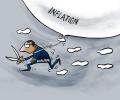
Wholesale price based inflation declined to a 3-month low of 1.89 per cent in November on cheaper food items, and experts predicted a 0.25 per cent interest rate cut by the RBI in the policy review in February. The Wholesale Price Index (WPI) based inflation was 2.36 per cent in October 2024. It was 0.39 per cent in November, last year. In August, 2024, it was 1.25 per cent.

Credit card spending reached Rs 2 trillion in October, a 14.5 per cent rise from September, largely driven by festival season purchases. However, the volume of outstanding credit cards increased only marginally during the same period. The spike in spending comes at a time when nearly all major credit card issuers are calibrating their growth in the segment due to visible signs of stress.
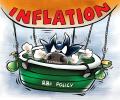
Reserve Bank Governor Shaktikanta Das on Friday said there is no plan to loosen interest rates as inflation continues to be the top priority for the central bank. Speaking to reporters at the central bank headquarters here, Das clarified that the inclusion of "over tightening" in his statement while announcing the fifth consecutive status quo in rates, should not be construed as anything else. A "loosening" in rates is not on the table, Das added.

The Insurance Regulatory and Development Authority of India (IRDAI) has asked life insurance companies not to advertise unit-linked plans as investment products in a recent circular.

After a year of decline, mergers and acquisitions (M&As) in India increased 13.8 per cent, reaching $69.2 billion in the first nine months of 2024, as against $60.8 billion during the same period in 2023. Led by Indian companies and private-equity (PE) firms, 2,301 transactions were signed between January and September this year as compared to 1,855 transactions reported in the same period last year, according to the Bloomberg data.

Union Finance Minister Nirmala Sitharaman's call for making lending rates affordable may not resonate anytime soon as banks still struggle with margin compression, and await clues from the Reserve Bank of India (RBI) on liquidity and rate action. Hinting that any lending rate cut was some time away, State Bank of India (SBI) managing director Vinay M Tonse said there was still some aggression in the market regarding deposit pricing.

Days before Diwali, the monthly economic review by the finance ministry has highlighted moderation in urban demand, softening consumer sentiments and limited footfall as areas that need to be watched. In its review, released on Monday, the ministry also noted the early signs of artificial intelligence displacing workers, as described in anecdotal reports. The commentary from several large consumer goods companies, including Nestl India, Hindustan Unilever, and ITC, in their recent quarterly earnings, has been around a sluggish urban demand. Rural consumption, however, has mostly seen a revival, the companies pointed out.

Analysts are warning of growing risks to the market's sustained momentum, and even to the possibility of consolidation at current levels. Domestically, markets are grappling with several challenges, including a slowing economy, as indicated by the latest GDP data for the July-September (Q2) quarter of 2024-25 (FY25), sticky inflation, fluctuations in the rupee, waning consumption, and high interest rates.

The funding environment in India for startups is improving this year if one were to go by Bain & Company estimates. Five private equity (PE) investors that come on top on the criterion of deal size collectively put in $9 billion in the first half of 2024, surpassing their outlay for last calendar year, when it was $8 billion. At the top of the list is Swedish firm EQT, which acquired US-based and listed Perficient at an enterprise value of $3 billion, the deal being done by the Indian wing of the company. It has also added to its list by putting in $500 million in WSO2, a "software as a service" company, increasing its tally to $3.5 billion.
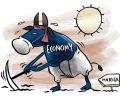
Fewer people participated in MGNREGA during the first six months of this financial year (April-September) compared to the same period last year, a recent analysis of the scheme's performance by LibTech showed.

The last batch of quarterly earnings, global trends and trading activity of foreign investors will guide the equity market movement in a holiday-shortened week ahead, analysts said. Volatility may continue amid investors' cautious approach in the election season. Markets will remain closed on Monday due to the fifth phase of the Lok Sabha elections in Mumbai.

As per the Interim Budget 2024-25 document tabled in the Lok Sabha, the government is not expected to receive any money from monetisation of public assets in the current fiscal.

'I now see rates rising again, particularly after recent losses - especially the January wildfires in Los Angeles.'
While liquidity in the banking system has turned surplus in the last few weeks, it could go back to deficit again, mainly due to corporate advance tax outflows. The net liquidity surplus of the banking system rose to touch Rs 1 trillion on Tuesday on the back of government spending, according to the data released by the Reserve Bank of India.

Public sector banks (PSBs) have proposed the Finance Ministry their plan to raise Rs 54,800 crore through Additional Tier-1 (AT-1) and Tier-2 bonds in the current financial year (FY25), 37 per cent more than the Rs 39,880 crore raised in FY24

Net foreign direct investment (FDI) in India, inflows minus outflows, declined 38.4 per cent year-on-year to $15.41 billion in the first 10 months of this financial year due to an increase in the repatriation of capital. According to the Reserve Bank of India's data in the March 2024 bulletin, FDI in India was $25.53 billion and outflows were $10.11 billion in April 2023-January 2024. In the same period last year, FDI inflows stood at $36.75 billion and outflows at $11.75 billion.

The gig economy market is expected to grow at a compound annual growth rate (CAGR) of 17 per cent to reach a gross volume of $455 billion by the end of 2024, according to a white paper by The Forum for Progressive Gig Workers. Estimates suggest the gig economy has the potential to create 90 million jobs and add 1.25 per cent to India's GDP (gross domestic product) over time.
